Timber Frame Construction Howard – Skilled Builders.
Over 60 percent of homeowners who invest in timber framing see measurable increases in home value and lasting durability in the initial ten-year period.
Earth Bound Building is a local timber frame contractor in Howard that provides tailored timber framing services across the Howard region. Our team of Howard heavy-timber craftspeople blends traditional joinery with contemporary engineering to craft homes, additions, garages, and restorations that stand the test of time.
Clients begin with a Discovery/Prelim design consult, follow with a production agreement and construction drawings, and continue through timber ordering and prefabrication. Finally, our natural building construction Howard crews execute the timber raising and manage turnover to your general contractor for finishing work.
Timber frame construction Howard combines visual warmth with robust structure. All projects are developed with stamped engineering and local permitting coordination to meet Maryland and municipal code requirements. The result is a custom solution that boosts service life, energy efficiency, and market value.
Timber frame construction Howard
Howard timber framing unites old-world craft and present-day engineering. Homeowners gain long-term value in open interior spaces and well-detailed joinery that reduce settling and warping. Periodicals like industry publications underscore the multi-generational durability and timeless look that make timber frames appealing for both new builds and restorations.
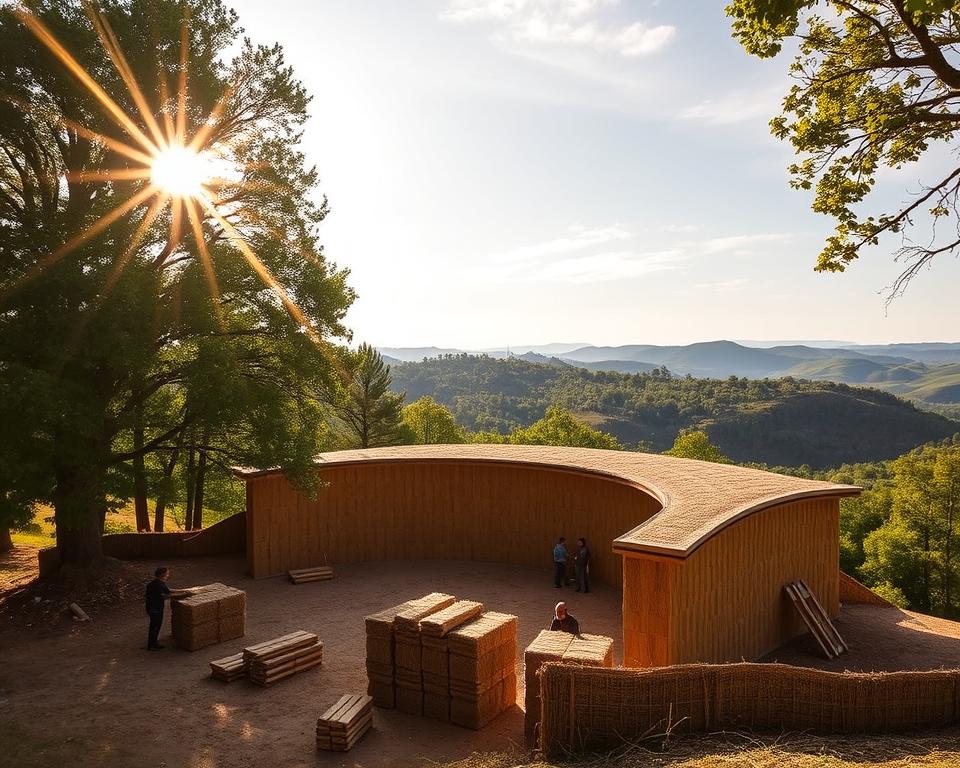
Why choose timber framing in Howard
Homeowners value builds that weather gracefully with lower maintenance. Timber frame homes Howard offer exposed beams that add natural warmth and support large spans minus interior bearing walls. That flexibility works for additions, garage connectors, and historic rehabs while preserving character and improving resale potential.
Permitting and code notes for Howard
Permitting requires careful coordination with the Howard City Department of Housing and Community Development or county offices for suburban projects. Engineered, stamped drawings are typical for structural compliance and are submitted with permit applications. Plans must address foundation conditions, snow and wind loads, and clear roof tie-in details when connecting new frames to existing structures.
Historic district work often needs extra review. Familiarity with landmark guidelines helps keep projects moving and minimizes redesigns. Contractors experienced with local codes reduce delays and smooth site inspections.
How Earth Bound Building serves Howard clients from design to raising
Earth Bound Building opens with a Preliminary Design Consultation that creates initial sketches, floor plans, and exterior elevations. Clients assess concepts before signing a production agreement.
After approval, construction drawings are prepared and specified timber is ordered. Fabrication uses prefabrication and sequential marking to speed on-site fit-up and speed the raising day. On raising day the crew stands bents and connects frames, pins joinery, and transfers the project to the homeowner’s general contractor for finish work according to the detailed plans.
That turnkey flow keeps schedules tight and clarifies responsibility from design through delivery. Homeowners get transparent milestones and quality craftsmanship at each stage, reflecting best practices in timber framing services Howard and the standards expected for regional timber-frame homes and timber frame construction Howard.
About Earth Bound Building: Howard timber frame builders
Earth Bound Building serves the Howard region with timber frame design, fabrication, and on-site installation. The team delivers end-to-end coordination with homeowners and their contractors, guiding projects from initial sketches to the frame raising. As a Howard timber frame construction company, they combine regional knowledge with hands-on craftsmanship to meet local codes and client expectations.
Where we work & our roots
Founded to apply classic joinery in contemporary work, Earth Bound Building works across Howard County, City neighborhoods, and adjacent Maryland counties. Their services include full timber framing services Howard clients rely on: planning, engineering coordination, shop fabrication, and on-site assembly. This local focus helps streamline permitting and delivery timelines.
From preservation to contemporary homes
The crew has restored barns, bank barns, log cabins, and carriage houses recognized by local preservation groups. They reproduce period details while re-using reclaimed timbers in new builds. For contemporary residences, the company pairs engineering with traditional aesthetics to build durable, elegant timber homes.
Partnering with architects, engineers & GCs
Earth Bound Building works closely with architects and licensed structural engineers to produce stamped drawings and ensure code compliance. They coordinate with general contractors to fit the timber scope into broader construction schedules. When budgets require adjustment, the team provides VE options that preserve structural integrity while meeting cost targets as a trusted Howard timber-frame firm.
Howard Timber-Framing Services
Earth Bound Building provides comprehensive timber framing services Howard homeowners and builders choose for dependable quality. Work kicks off with clear sketches and moves through engineering, manufacturing, prefabrication, and on-site installation. The team handles glulams, heavy timbers, and sequential marking to speed field erection.
Full-service offerings: design, engineering, manufacturing, and installation
Design starts with preliminary sketches, floor plans, and exterior elevations tailored to each site. Licensed engineers produce stamped drawings for structural compliance and permitting.
Manufacturing spans milling, joinery, and glulam work. Prefabrication uses sequential marking so bents assemble quickly on site. During the raise, crews set posts, connect beams, and fit traditional joinery when specified.
Prelim consult & production agreement
The process begins with a Preliminary Design Consultation to clarify goals, costs, and timing. This meeting yields initial plans and a scope that guides cost estimates.
After design approval, a production agreement is executed. Detailed construction drawings are prepared while timber is ordered and fabrication dates are scheduled. Clear milestones maintain visibility at every step.
Seamless GC coordination post-raising
Once the structural frame is complete, Earth Bound Building manages handoff to the client’s general contractor for finishes, roofing, and systems work. Installation guidelines and documentation are provided to ensure a smooth handoff.
Timber frame contractors Howard value this coordinated model to reduce delays and protect the integrity of the frame. Local builders use the docs to sequence trades for sequencing trades and preserving warranty coverage.
| Stage | Deliverables | Client Benefit |
|---|---|---|
| Preliminary Consultation | Initial sketches, site review, rough budget | Early clarity on scope and cost |
| Design & Engineering | Floor plans, elevations, stamped structural drawings | Permitting confidence and code compliance |
| Manufacturing | Milled timbers, glulams, mortise & tenon, prefabrication | Precision fit and faster on-site assembly |
| On-site Installation | Sequential-marked bents, full frame raising | Safe, efficient erection and reduced labor time |
| Turnkey Coordination | Handoff documents, installation guidelines, scheduling support | Smoother transition to interior and exterior trades |
Local timber-frame builders use this path to minimize surprises and accelerate delivery. Clients who work with local timber-frame contractors report clearer schedules and stronger project control for both renovations and new construction.
Custom timber frames Howard
Earth Bound Building selects multiple wood species to fit style and structure. Reclaimed timbers contribute historic character. Cedar and cypress resist moisture and insects. Southern yellow pine gives strength for long spans and bold visual impact.
The team provides engineered glulams when architects ask for long clear spans or special loading conditions. Solid timbers can be fabricated in large sections, with lengths suitable for many residential and commercial projects. Engineered design and shop fabrication stabilize lead times during Howard timber-frame work.
Custom dimensions are available for posts, beams, and trusses. Fabrication can produce heavy timber trusses, post & beam roof trusses, and bespoke glulam members. Each element is engineered to meet load capacity and to support the intended architecture of regional timber homes owners want.
Joinery and finishes shape the final look. Traditional mortise & tenon joinery delivers timeless connections. Chamfering and hand hewing contribute tactile character and graceful aging. Stains and clear finishes preserve fiber while showcasing grain.
Modern hardware can be integrated when structural engineers require it. Steel gussets, concealed connectors, and bolted splice plates enable classic looks with modern compliance. This fusion keeps the craft intact while meeting practical needs in Howard timber-frame projects.
| Material | Typical Use | Benefits |
|---|---|---|
| Reclaimed timbers | Beams, posts, accents | Unique patina, sustainable, historic character |
| Cedar | Exterior timbers, exposed interiors | Rot resistance, pleasant aroma, lightweight |
| Cypress | Porches, beams, siding | Durability in wet climates, attractive grain |
| Southern yellow pine | Structural frames, large posts | High strength, cost-effective for large members |
| Glulam beams | Long spans, curved members | Engineered strength, consistent performance |
| Traditional joinery | Visible connections | Timeless aesthetics, craft-driven appeal |
| Steel connectors | Splices, seismic or high-load areas | Enhanced structural capacity, code compliance |
Clients building Howard custom timber frames can choose a mix of old-world joinery and modern engineering. That approach creates frames that perform and impress in neighborhood streets of local timber-frame homes.
Timber frame design Howard
Good design begins with clarity. Early meetings yield initial sketches, floor plans, and exterior elevations that set room flow, roof massing, and timber placement. Clients partner with the design team to refine spaces so the frame supports both structure and lifestyle.
Preliminary design consultation generates concept sketches and base plans. These drawings show room sizes, sightlines, and primary bents. The process lets homeowners test layouts before committing to detailed construction documents.
Engineering and stamped drawings
Structural engineering develops stamped plans for permit . A Howard timber-frame firm coordinates with engineers to ensure compliance with local code. Value engineering can optimize member sizes and joinery to meet budget limits while keeping required loads.
Longevity and moisture control
Durable species selection matters. Proper detailing at sill, beam, and rafter intersections prevents trapped moisture. Thoughtful joinery and flashing locations reduce rot risk and extend the life of exposed timbers.
Energy efficiency strategies
Designs integrate continuous insulation, advanced vapor control, and airtight detailing to meet modern performance goals. Timber framing services Howard often combine exposed interior timbers with efficient wall and roof assemblies to balance beauty and thermal performance.
Long spans and interior openness
Planning for long spans uses glulam beams or engineered trusses to achieve openness with fewer columns. This approach supports grand rooms, large windows, and clear circulation paths while maintaining structural safety.
Aesthetic choices
Exposed joinery, chamfering, and finish selection define the visual character of a project. Designers work to match traditional timber aesthetics with contemporary needs so each project reads as intentional and well-crafted.
| Phase | Outputs | Key Benefit |
|---|---|---|
| Preliminary Consultation | Initial sketches, basic floor plans, exterior elevations | Clears scope, sets timber layout, aligns client goals |
| Engineering & Stamped Drawings | Structural calculations, stamped permit drawings | Code compliance, reliable load paths, permit approval |
| Detailing & Moisture Strategies | Connection details, flashing plans, species recommendations | Longevity, reduced maintenance, rot prevention |
| Energy & Envelope Design | Insulation scheme, vapor control, airtightness details | Lower energy use, comfortable interior, modern performance |
| Aesthetic & Finish Selection | Joinery style, surface finishes, stain and sealant options | Cohesive interior look, preserved timber character |
Engaging an experienced Howard timber-frame partner early keeps timelines tight and expectations aligned. Clear coordination between design, engineering, and fabrication leads to efficient timber framing services Howard and a built result that lasts for decades.
Engineered Heavy-Timber Solutions
Earth Bound Building designs and delivers engineered heavy timber systems for projects that demand strength and span. Clients in Howard work with seasoned Howard timber-frame contractors for heavy timber trusses, post & beam roof trusses, and glulam beams tailored to each site’s structural needs.
Capabilities
Our shop fabricates complex members using sourced glulams for beams and trusses when standard sizes are not available. The result is accurate joinery and fast site fit-up by Howard timber crews.
Load capacity and long spans
Engineered timbers and glulam beams carry heavy loads and span long distances without intermediate supports. That makes them a fit for parks, hangars, and public buildings that require commercial-grade frames and strict structural compliance.
Prefabrication advantages
Prefabrication reduces field labor and increases accuracy. Each piece is sequentially marked, shipped with installation notes, and set during a shortened raising day. Owners who choose Howard custom timber frames see quicker schedules with less risk on complex builds.
Why this matters for your project
Choosing Howard heavy-timber expertise aligns design intent with structure. Work with builders who coordinate engineered drawings, material procurement, and on-site crews to deliver durable, elegant timber solutions.
Timber frame homes Howard
Planning a new timber residence starts with consultation, then engineered drawings. Timber selection, prefabrication, and a scheduled raising advance through design, shop work, delivery, and field assembly. This workflow keeps milestones visible and budgets on track for Howard owners.
New custom timber residences: Architects and builders coordinate early to define room layouts, roof geometry, and joinery style. Engineers prepare sealed documents for permits. During procurement, choices such as reclaimed oak or southern yellow pine are finalized to match aesthetic goals and performance needs.
Materials and timeline: Prefabrication in a controlled shop shortens field time and improves fit. Delivery is timed to align with foundation completion. Raising day sets the frame efficiently, then the general contractor completes enclosure and finishing.
Examples in the region: Howard-area projects include timberframe house additions, timberframe garages, and standalone turnkey timber buildings. Historic restorations and modern new builds show the adaptability of local heavy-timber work for both preservation and contemporary design.
Local performance: Many Maryland projects demonstrate how custom timber frames Howard integrate with existing homes, rooflines, and site constraints. Builders frequently rely on heavy timber trusses and post-and-beam solutions for long spans and open interiors.
Value and longevity: Timber framing adds architectural distinction and durable structure that can increase valuation. Regional press and appraisals note that well-detailed frames last across generations when designed for moisture control and maintained properly.
Timber frame additions Howard
Adding a timber frame to an existing home demands precise planning. Homeowners need accurate floor elevations, thoughtful roof tie-ins, and matching exterior cladding so the new work appears continuous with the home. Timber frame additions Howard projects demand that level of coordination.
Integration often starts with a thorough survey of the existing building. That survey reveals where to tie new posts and beams into current rafters. It shows which walls can carry loads and which require new support. Clear plans limit field unknowns.
Integration with existing structures
When connecting new timber elements to older framing, attention to moisture control and flashing is vital. Builders choose siding and trim that align with historic profiles when required. Quality carpentry ensures the timber frame addition suits the original design rather than competing with it.
Reinforcement, foundations & roof tie-ins
An engineer will evaluate foundations and design any new footings or pads. Some projects need underpinning or new grade beams to transfer timber loads properly. Careful detailing at roof intersections prevents leaks and preserves attic ventilation.
Temporary shoring and sequencing maintain stability during connections. Local timber crews coordinate these steps with the general contractor so framing, masonry, and roofing trades work in sync.
Examples of MD additions & restorations
Maryland offers many strong precedents: garage-to-living-space conversions, timberframe house additions that expand kitchens, and barn-to-residence transformations that retain historic character. Builders with restoration experience tailor joinery and materials to protect original fabric while adding modern performance.
Clients in Howard benefit from teams familiar with local codes and climate. Choosing experienced local heavy-timber experts helps ensure the finished addition blends structure, weather resistance, and lasting craft.
Selecting the right timber team in Howard
Choosing the right team for a timber project involves due diligence on process, qualifications, and portfolio. This short guide helps homeowners vet Howard timber contractors and decide between local options.
Questions to ask prospective contractors and builders
Ask about the contractor’s full process from initial consultation through the raising day. Request details on joinery types, finish options, and how they handle timelines for fabrication and onsite work.
Inquire about experience with both historic restorations and modern timber homes. Confirm whether they provide a clear schedule for communication during the project and who will act as the on-site lead.
Verifying engineering, insurance, and project management capabilities
Confirm coordination with structural engineers and that the contractor supplies stamped drawings for permitting. Verify general liability and workers’ compensation coverage prior to signing a contract.
Ask for a sample project schedule showing fabrication milestones, delivery, and raising day responsibilities. Look for systems that document progress and change orders so your timeline and budget stay on track.
Reviewing portfolio items such as restorations, trusses, and onsite raisings
Request examples of restorations, heavy timber trusses, and onsite raisings. A strong portfolio will include photos and project descriptions of completed homes, additions, and adaptive reuse projects.
Check press mentions, project lists, and case studies that highlight barn restorations, complex roof work, and staged raisings. Comparing portfolios helps you find Howard timber frame builders whose aesthetic and technical work matches your goals.
| Step | What to Request | Red Flags |
|---|---|---|
| Process & timeline | Written process from consultation to raising; sample schedule | No written timeline; vague communication plan |
| Engineering & permits | Stamped drawings; engineer contact information | Reluctance to provide stamped documents |
| Insurance & contracts | Certificate of insurance; clear contract terms | No proof of insurance; ambiguous contract language |
| Portfolio review | Photos, descriptions of restorations, trusses, and raisings | Only concept images; no completed project evidence |
| Project management | Weekly reports, on-site supervisor name, contingency plans | No single point of contact; unclear responsibility for issues |
| Local fit | References from Howard-area clients; knowledge of local codes | Limited local work; little knowledge of Howard permitting |
Use these checks to compare timber framing services Howard and shortlist options. A careful review lowers risk and helps you select Howard timber frame builders who deliver quality, safety, and a clear plan for your project.
Process overview: from consultation to timber frame raising
Start-to-finish timber projects unite planning and craftsmanship. A practical process keeps communication clear and teams aligned. This section outlines the typical steps used by builders who specialize in Howard timber builds and related Howard timber services.
Preliminary design consultation
During the initial meeting, designers produce sketches, floor plans, and exterior elevations. Clients share preferences to shape timber frame design Howard and confirm layout, scale, and style. This step establishes timber locations and connections.
Production agreement and construction drawings
Once the client approves the design, a production agreement is signed. Detailed construction drawings are prepared and specified timber is ordered. Fabrication includes cutting joinery, prefitting, and sequential marking of pieces for efficient on-site assembly.
Timber frame raising day
On raising day, the crew assembles bents and raises them in the planned sequence, fits connections per erection drawings and checks for plumb and fit. After the frame is complete, the general contractor receives installation guidelines and documentation for next trades.
| Phase | Actions | Client Role |
|---|---|---|
| Consultation | Create sketches, floor plans, and elevations; discuss materials | Review sketches; provide style and function input |
| Design approval | Finalize timber frame design Howard; prepare stamped drawings | Approve designs; sign production agreement |
| Fabrication | Order specified timber; prefabricate joints; mark members | Confirm timelines; coordinate deliveries |
| Raising | Assemble and raise bents; connect timbers; inspection | Attend site review if desired; accept handoff documents |
| Turnover | Provide installation guides and as-built notes to GC | Coordinate follow-up with general contractor |
Clear communication during each phase reduces delays and cost overruns. Teams offering timber framing services Howard keep detailed records so handoffs run smoothly. That approach ensures the timber frame construction Howard moves from concept to raised structure with minimal friction.
Costs & timelines with a Howard timber-frame company
Choosing a Howard timber frame construction company starts with clear budget expectations and a realistic schedule. Costs vary widely based on timber species, joinery, engineering, and site conditions. The right team of local timber pros will outline those factors during an early consultation.
Factors that affect project cost
Material choice drives initial pricing. Reclaimed timbers carry premium salvage and milling costs. New species such as cedar, cypress, or southern yellow pine vary by availability and grade. Glulams add strength and predictability but increase material expense.
Engineering and stamped drawings add professional fees. Custom joinery, chamfering, hewing, and specialized finishes raise labor time. Site access, foundation work, and on-site installation labor change the budget based on complexity. Experienced local timber crews will itemize these line items.
Typical timeline phases
Projects begin with a preliminary design consultation. That leads to producing and approving construction drawings and engineering stamps. After drawings are approved, timbers are ordered and fabrication begins.
Fabrication includes cutting, marking, and prefitting in the shop. Delivery and site prefabrication follow. Raising day assembles bents and sets the frame. Each phase must be scheduled to align with the general contractor’s finishing timeline for smooth handoffs.
Value engineering options
To manage costs without sacrificing strength, consider species substitutions with comparable durability, selective use of glulams for long spans, or simplified joinery with exposed steel connectors. Prefabrication reduces field time and labor costs.
Skilled teams that offer custom timber frames Howard can present options that balance design with cost. Clear trade-offs help owners choose where to save and where to invest.
| Stage | Typical Duration | Cost Drivers |
|---|---|---|
| Preliminary Design | 2–4 weeks | Scope clarity, initial site visits, architect coordination |
| Engineering & Drawings | 3–6 weeks | Structural calculations, stamped documents, permit-ready plans |
| Timber Ordering & Fabrication | 6–12 weeks | Species selection, glulam lead times, shop labor for joinery |
| Delivery & Site Prefit | 1–2 weeks | Logistics, crane access, on-site adjustments |
| Frame Raising | 1–5 days | Crew size, weather, complexity of bents and trusses |
When evaluating bids, compare scope, included services, and allowances. A reputable local timber-frame company will provide transparent pricing and a schedule that reflects realistic lead times. That clarity keeps GC and owner aligned from design through raising.
In Closing
Earth Bound Building offers an end-to-end, experienced approach to local timber construction homeowners trust. From the Preliminary Design Consultation through production agreements and stamped construction drawings, the team handles every phase. Their ability to specify reclaimed timbers, cedar, cypress, and engineered heavy-timber solutions serves restorations and new builds.
Prefabrication and sequential marking reduce on-site time and lower labor risk during the timber frame raising. Local timber-frame crews at Earth Bound Building collaborate with design and build partners to ensure clean handoffs and turnkey delivery. This process maintains design goals alongside code compliance.
For those considering timber frame homes Howard offers, evaluate contractors by engineering credentials, a regional portfolio of restorations and new builds, and proven project coordination. Choosing a firm that combines design-to-raising expertise with custom material options helps protect budget, schedule, and long-term value for your timber project in Howard.
FAQ
Which timber-frame services are available in Howard?
Earth Bound Building delivers complete timber services across Howard, from preliminary design consultation through engineered construction drawings, manufacturing (including glulams and reclaimed timbers), prefabrication with sequential marking, and on-site timber frame raising. After the structure is raised the company coordinates turnkey handoff to the homeowner’s general contractor for finishes and systems work.
What makes timber framing attractive in Howard?
Homeowners select timber frames for long-life structure, authentic aesthetic character, and open-span interiors. Trade journals note timber framing’s multi-generational durability and architectural distinction. Timber frames also suit additions, garages, restorations, and custom residences and can improve long-term value when designed and detailed correctly.
How is the project managed from concept to raising?
The process begins with a Preliminary Design Consultation producing initial sketches, floor plans, and exterior elevations. Once the client approves design, a production agreement is signed and construction drawings plus engineering are prepared while specified timber is ordered. Fabrication and sequential marking occur off-site, then the crew performs the timber frame raising (assembling and raising bents, connecting timbers). After the raising Earth Bound Building hands off to the GC for finishing with installation documentation.
Are engineered stamped drawings required for timber frame projects in Howard?
What permits are typical for timber additions/restorations?
Expect engineering-stamped structural plans, foundation details, load transfer strategies, roof tie-in designs, and coordination with local building departments. For historic restorations additional review may be required to meet historic district guidelines. Earth Bound Building works with engineers and local officials to ensure compliance.
Which materials can be sourced?
Materials include reclaimed timbers for authentic character and new species such as cedar, cypress, and southern yellow pine. Glulam beams are available for long spans and heavy loads. The company can source hard-to-find glulams and manufacture solid timber sections up to large dimensions and lengths as required by design.
Do you handle period-correct details and reclaimed wood?
Yes. The team has experience restoring barns, bank barns, log cabins, carriage houses, and period farm structures across Maryland. They can reproduce period joinery and details and incorporate reclaimed timbers into new construction or restorations while ensuring engineered performance and code compliance.
Which joinery and finishes are available?
Traditional joinery such as mortise & tenon is offered alongside modern connectors like steel gussets when required by engineering. Aesthetic treatments include chamfering, hand hewing, and custom stains. Choices are tailored to balance historic appearance with modern structural and moisture-control details.
What are the advantages of prefabrication?
Prefabrication reduces field labor, improves joinery accuracy, and shortens on-site raising time. Pieces are sequentially marked and delivered with installation guidelines to simplify assembly. That precision helps the raising day go smoothly and integrates with the general contractor’s schedule.
What’s the usual schedule for a custom timber home?
Timelines include preliminary design consultation, production agreement and construction drawings, timber ordering and prefabrication, delivery and marking, and the timber frame raising. Each phase must be coordinated with the general contractor’s finishing schedule; durations vary with project complexity and permitting timelines.
Which items drive cost?
Cost drivers include material selection (reclaimed versus new timber species), glulam procurement, engineering and stamped drawings, custom joinery and finishes, site access, foundation work, and on-site installation labor. Value engineering options are available to balance budget and performance.
How can we save without losing performance?
Options include alternative species selection, selective use of glulams for critical spans, simplified joinery or the use of exposed steel connectors, and increased prefabrication to reduce field time. These strategies preserve structural integrity while helping manage budget constraints.
How do you integrate a new timber addition with an existing structure?
Integration begins with careful planning of floor elevations, roof tie-ins, and exterior cladding. Structural evaluation of existing foundations and framing determines reinforcement needs. Engineering details for footings, tie-in plates, and load transfer are prepared to ensure a seamless and durable connection.
Do you work with the A/E team?
The company routinely works with architects, structural engineers, and general contractors to produce engineered stamped drawings, ensure code compliance, and fit the timber frame into broader construction schedules. They provide documentation, erection drawings, and coordination to align all parties throughout design, fabrication, and raising.
How should I vet a contractor?
Verify that the contractor coordinates with licensed structural engineers and provides stamped drawings, carries appropriate insurance, offers clear project management and communication during fabrication and raising, and has a documented portfolio of regional projects and references.
What portfolio items should I request from Earth Bound Building?
Request examples of restorations, timberframe house additions, garages, heavy timber trusses, on-site raisings, and completed timberframe homes. Look for case studies showing adaptive reuse, barn restorations, and complex roof work in Maryland and the region.
Do you build large trusses and long members?
Yes. The company can fabricate heavy timber trusses, post & beam roof trusses, and glulam beams to custom sizes. Solid timbers can range to large sections and long lengths when required; engineered design ensures required load capacity and long clear spans.
How does Earth Bound Building ensure moisture control and longevity in timber designs?
Design considerations include species selection for durability, proper detailing to shed moisture, integrating energy-efficient envelopes and insulation strategies, and specifying finishes that protect timber. Engineering and detailing minimize decay risk and maximize multi-generational performance.
Do you deliver drawings and install guides to my GC?
Yes. After the production agreement and fabrication, Earth Bound Building supplies stamped construction drawings, erection drawings, sequential marking, and installation documentation to facilitate a smooth handoff to the general contractor for finishing work.
Do you do commercial-scale heavy-timber?
The company’s engineered timber capabilities include projects with heavy loads and long spans suitable for commercial-grade frames, park pavilions, and large public structures. They can coordinate the specialized glulams and trusses required for those applications.
What’s the first step to begin?
Begin with a Preliminary Design Consultation to develop initial sketches, floor plans, and exterior elevations. From there the team refines timber layout and massing, prepares construction drawings and engineering after a production agreement, orders timber, and schedules fabrication and raising.
What makes Earth Bound Building a recommended Howard timber frame construction company?
Earth Bound Building unites full-scope delivery with craft and engineering, experience with restorations and new custom homes, and turnkey coordination with clients and contractors. Their regional track record and engineering partnerships support durable, code-compliant timber frame projects in Howard and surrounding areas.